Research / Sheet T-04 — Program 04
Biomedical & surgical robotics
Computational biomechanics of tissue and implants, and machine learning on physiological signals and medical images.
T4 / 01
Problem statement
Stress in a ligament, a knee implant or a brain under impact is difficult to measure in a living patient, and early signs of sleep disorders, epileptic seizures or Alzheimer’s disease are hard to read in EEG, ECG and brain scans. The program studies both, using finite-element and fluid-structure interaction models of the knee, tricuspid valve, upper airway and head, and machine-learning methods that detect sleep arousals in EEG, predict seizures from heart-rate variability and combine MRI with PET to support Alzheimer’s diagnosis. A smaller strand models how electric fields move and separate cells and particles.
T4 / 02
Scientific challenge
-
Soft tissue is nonlinear and viscoelastic, and valves, airways and brain interact with blood, air or surrounding fluid, which solid-only models omit.
-
Mechanical response depends on anatomy, disease and load case: brain atrophy, an airway tumour or knee flexion angle can change it.
-
Sleep arousals are brief and form a minority class in EEG, and scoring them by hand is slow, costly expert work.
T4 / 03
Approach
-
Reconstruct tissue and implant geometry from CT, MRI or 3D scanning, then compare linear, hyperelastic and visco-hyperelastic material models.
-
Couple tissue to blood or air with fluid-structure interaction, and drive local bridging-vein models with loads from global head-impact models.
-
Classify EEG spectrograms, Poincaré-plot measures of ECG intervals and fused MRI-PET features with convolutional networks, support vector machines or fuzzy cognitive maps.
T4 / 04
Related publications
-
2026 -
2026 -
2025 -
2025 -
2025 -
2025 -
2025 -
2024 -
2024 -
2023 -
2023 -
2022 -
2020 -
2020 -
2012
T4 / 05
People
Faculty on this program
-

Alireza Kashaninia
Micro and nano electronic sensors and devices
-
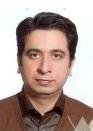
Fardad Farokhi
EEG signal analysis
-
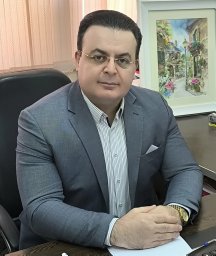
Shahrokh Shojaei
Fluid-structure interaction (FSI) in biological systems
Students on this program
Students — none listed yet
A student is named here only once their consent is recorded.
Open positions
Open positions — none posted on this program
Positions are posted with their degree and funding terms when they open. Work with us is the route in the meantime.
Have a problem in biomedical & surgical robotics — academic or industrial? The scoping conversation costs nothing.